
Running on Empty: Addressing the Energy Shortage in America by Refueling the Non-Profit Sector

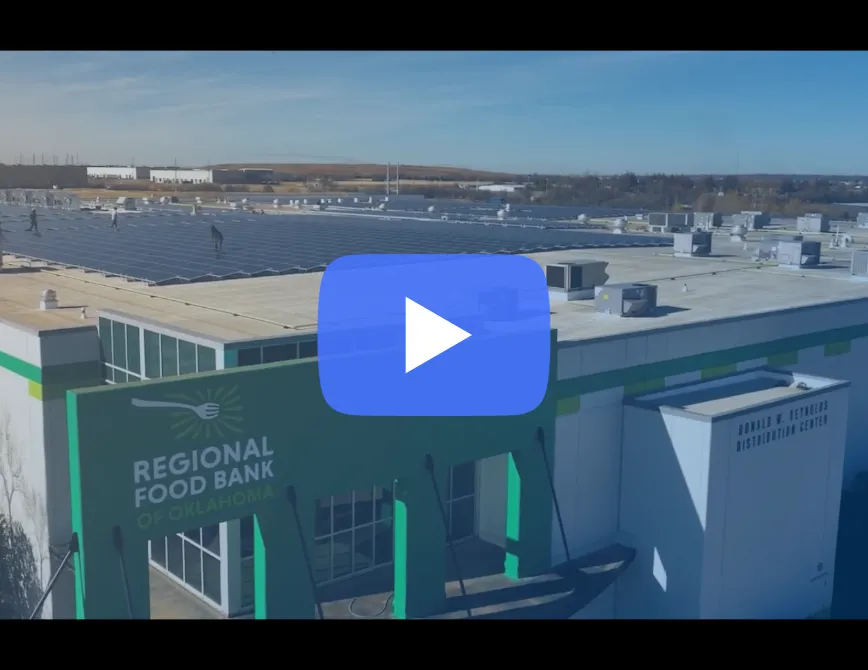
See how solar savings free resources for mission-critical work, helping the Regional Food Bank strengthen operations, stabilize energy costs, and reinvest more dollars into serving families.
The United States is currently facing a dual-track energy crisis. On one hand, our national grid is aging and struggling to keep pace with the soaring demand driven by extreme weather, the electrification of transport, and the rise of data-heavy industries. On the other hand, the non-profit organizations that form the backbone of our communities – homeless shelters, food banks, places of worship, and community centers are being squeezed by the skyrocketing costs of utility bills.
What if there was a way to solve both problems simultaneously? What if your investment capital could bolster the American energy supply while directly lowering the overhead costs for organizations doing good?
This is the bridge built by Brightwell. By leveraging a unique investment model focused on renewable energy infrastructure, Brightwell allows investors to participate in the energy transition while providing non-profits with the gift of long-term financial sustainability.
The Problem: A Grid Under Pressure and Non-Profits Under Siege
To understand the value of the Brightwell model, we must first look at the "Energy Shortage" in a modern context. We aren't necessarily running out of fuel; we are running out of capacity and efficiency. The U.S. Department of Energy has noted that significant investment in localized, distributed energy resources (like solar) is required to prevent grid failure and meet climate goals.
Areas of Risk of Energy Shortfalls in USA
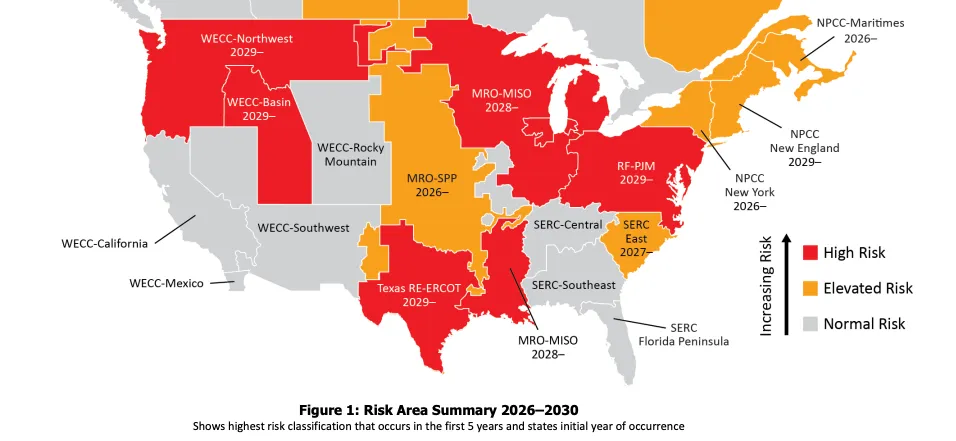
However, the entities that could benefit most from renewable energy are often the ones least able to afford it. A typical non-profit operates on thin margins. When utility rates spike 15% in a single year, that money is often pulled directly from their programs. Energy costs are typically the second highest expense for a non-profit, only behind personnel expenses.
What does this mean?
- A community center might have to cut an after-school program just to keep the lights on.
- A food bank uses less dollars each year to buy food for those who they are serving, and more dollars to run refrigeration.
- At a place of worship – a roof that needs replacing keeps getting put on the back-burner, because the rising costs eliminate the feasibility of saving for capital improvements.
This is further compounded by non-profits not being able to take advantage of federal tax benefits (like the Investment Tax Credit) because they do not pay corporate taxes. This creates a "green gap" where the organizations that need energy savings the most are locked out of the renewable revolution.
The Brightwell Approach: Energy as an Asset
Brightwell enters this space by treating energy infrastructure not just as a utility, but as a high-performing investment asset. The model is built on a simple but profound premise: Capital should flow where it does the most good.
Brightwell facilitates the installation of advanced energy systems - primarily solar and cool roofs - on the properties of non-profit organizations. Here is how it works for the investor and the community:
- Direct Infrastructure Investment: Investors provide the capital necessary to fund energy projects for non-profits. This bypasses the traditional donation model, where money is given once and gone. Instead, the money is put to work in physical assets.
- Bridging the Tax Gap: Because Brightwell structures these projects as a partnership, they can capture the tax incentives and depreciation benefits that a non-profit cannot. These benefits are passed through to the project’s viability, making the math work for everyone involved.
- The Energy Management Service Agreement (EMSA): The non-profit agrees to allow the system to operate on their property in exchange for taking control of their rising costs of energy. This provides the non-profit with predictable, meaningful, and long-term savings on their operating costs.
Why This is the Ultimate "Impact Investment"
For the modern investor, impact is no longer just a buzzword; it is a requirement. However, many ESG (Environmental, Social, and Governance) funds are criticized for being "greenwashed" or too far removed from tangible results.
Investing through Brightwell offers a Triple Bottom Line return:
1. The Environmental Return: Decarbonizing the Grid
Every kilowatt-hour generated by a Brightwell-funded project on a non-profit’s roof is a kilowatt-hour that doesn’t have to be generated by a coal or gas-fired power plant. By decentralizing energy production, these investments reduce the strain on the national grid and contribute to a more resilient, localized energy economy.
2. The Social Return: Strengthening the Safety Net
This is the secret sauce of the Brightwell model. When a food bank saves $1,000 a month on electricity, that is $12,000 a year that goes back into buying meals. Over a 25-year period, that equates to $300,000 in additional community services. You aren't just investing in silicon and glass; you are investing in the mission of the organization underneath the roof.
3. The Financial Return: Stability in Volatility
Energy is a fundamental need. Unlike the volatile swings of the tech sector, energy production from a contracted solar array is highly predictable. By investing in these projects, individuals can seek returns that are decoupled from the standard stock market, backed by real-world infrastructure and long-term contracts.
Addressing the U.S. Energy Shortage
The United States is currently in a race to modernize its energy production. The "shortage" is often a matter of peak demand—on the hottest days of the year, the grid cannot keep up.
By placing energy solutions on non-profit buildings across the country, Brightwell is essentially enabling any impact investor to assist with building a "virtual power plant." When thousands of buildings produce their own power, the collective demand on the central grid drops. This strategy helps prevent brownouts, lowers prices for everyone, and creates a "buffer" that makes the entire national energy ecosystem more robust.
Moving From "Giving" to "Investing"
For decades, the only way to help a non-profit was to write a check. While philanthropy is vital, it is often inconsistent. Brightwell represents a shift toward sustainable finance. Instead of a one-time gift, you are providing a non-profit with a 25-year solution to one of their biggest expenses. You are helping them go "off-grid" from the rising costs of traditional utilities. For the non-profit, this is the ultimate gift: the gift of a lower overhead, forever.
Your Capital, Their Future
The energy problems facing the United States are complex, but the solution doesn't have to be. It requires a rethink of how we deploy capital. We can no longer afford to separate doing well from doing good.
Through Brightwell, you can take a proactive stance. You can help solve the American energy shortage by adding clean, renewable capacity to the grid. You can provide a financial lifeline, by refueling the non-profits that keep our communities whole. And you can do it all while building a portfolio that reflects the world you want to live in.
It’s time to stop seeing energy as a bill to be paid and start seeing it as an opportunity to be seized. With Brightwell, your investment has the power to keep the lights on—not just for you, but for the organizations that need it most.
Perspectives on modern operations and smart growth.


Let’s chat to see how we can unlock new opportunities for impact, together.