
How Solar Tax Equity Works for Investors and Nonprofits

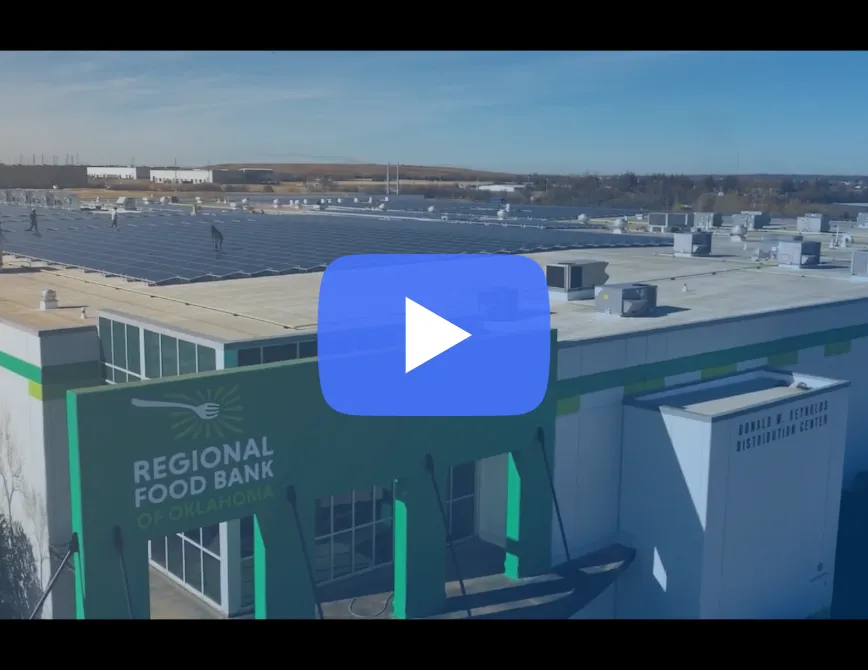
See how solar savings free resources for mission-critical work, helping the Regional Food Bank strengthen operations, stabilize energy costs, and reinvest more dollars into serving families.
How Solar Tax Equity Works for Investors and Nonprofits
For nearly two decades, solar energy has been one of the most powerful yet underutilized investment opportunities available to individual taxpayers. While institutional investors understood the value of federal incentives early on, 2025 created a new environment. Updated legislation, extended tax credits, and enhanced depreciation rules gave individual investors an opportunity that previously felt out of reach.
In this episode of the Brightwell Podcast, CEO Tony Capucille and CFO Trey Raymer explain the fundamentals in plain English. They cover why solar tax equity matters right now, how the incentives work, and what this combination makes possible for investors and the nonprofits they support.
Watch the full conversation on YouTube: https://youtu.be/c9bl6W6-Nz0
The Forces Behind Solar’s Rise
In simple terms, Safe Harbor establishes when a project officially “begins construction” under IRS rules. By meeting that Since 2006, the federal government has encouraged renewable energy development through the Investment Tax Credit (ITC). Institutions such as insurance companies and large funds were the earliest participants because they had the tax profiles and capital scale required.
Today the landscape looks different. Several factors have created a strong environment for individual investors:
- The ITC is extended through at least 2030, creating stability.
- Investors can carry credits back three years and forward 20 years, which provides flexible planning options.
- Access is expanding as companies like Brightwell open the space to accredited individuals instead of limiting it to institutions.
With incentives lasting through the end of the decade and energy costs increasing nationwide, solar has moved into the mainstream for high-income taxpayers who want tax efficiency, income, and impact.
How the Core Framework Works
Solar tax-equity investing relies on three components that work together to reduce tax liability and generate returns.
1. The Investment Tax Credit (ITC)
A tax credit reduces tax liability dollar for dollar. This is more powerful than a deduction because it offsets the amount owed directly.
Solar is especially attractive because:
- The credit often covers 30 to 50 percent of project cost, depending on eligibility.
- Unused credits can be carried back three years. This allows investors to amend returns and potentially receive refund checks.
- Remaining credits can be carried forward for up to 20 years.
These features are uncommon within the tax code and create the foundation of solar’s appeal.
2. 100 Percent Bonus Depreciation
Bonus depreciation allows investors to deduct the depreciable basis of the project in the first year. After adjusting for half of the ITC, investors can still deduct most of the remaining basis. Someone in a 37 percent federal bracket may receive meaningful tax benefits from this component alone.
When combined with the ITC, many investors recover a significant portion of the total project cost in Year 1. Results vary depending on the tax profile and state of residence.
3. Long-Term Income Through Service Agreements
Brightwell structures long-term Energy Management Service Agreements (EMSAs) with nonprofits. These agreements replace a nonprofit’s rising utility bill with a predictable service payment.
For investors, the benefits include quarterly income and a stable counterparty. For nonprofits, the benefits include lower energy costs over time and improved budget predictability.
Terms generally range from 6 to 25 years.
When these three components are combined, tax dollars that would normally go to the IRS become part of an income-producing asset that strengthens community organizations.
Timing, Policy, and the 2025 to 2030 Window
Although the solar ITC has existed for many years, the current environment is especially favorable.
Several factors are driving urgency:
- The ITC is stable through at least 2030.
- Bonus depreciation was expanded under 2025 legislation.
- Utility prices continue to rise, increasing the value of predictable costs for nonprofits.
- Carryback provisions allow investors to capture value both retroactively and prospectively.
For individuals paying 200,000 to 250,000 dollars or more in annual taxes, solar tax equity may be one of the most effective ways to realign tax dollars into something productive.
How Brightwell Brings It All Together
Brightwell takes an institutional-level process and makes it accessible to individual impact investors. Tony and Trey highlight how this works:
- Brightwell handles sourcing, underwriting, engineering, legal structuring, contractor management, and compliance.
- Investors own the solar asset directly instead of participating through a transfer or multi-layered structure.
- Nonprofits receive transparent agreements built to strengthen their financial position.
- Investors receive a structured combination of ITC, bonus depreciation, and income that aligns with long-term planning.
The most important part of the structure is impact. Solar systems often generate hundreds of thousands, and in some cases millions, of dollars in long-term savings for mission-driven organizations.
Learn More
If you have paid significant annual federal taxes, or have done so in the past three years, solar tax-equity investing may be a strategic way to redirect those dollars into an asset that benefits both you and the organizations you care about.
Brightwell encourages investors to consult with their CPA, financial advisor, or tax attorney to evaluate how the ITC and bonus depreciation may apply to their specific situation.
To learn more, connect with the team to see how you can start building impact by redirecting your tax dollars.
Perspectives on modern operations and smart growth.



Let’s chat to see how we can unlock new opportunities for impact, together.