
Make October 15th Better Again

Join Brightwell CEO Tony Capucille and Director of Advocacy Nate Bauer as they unpack how impact investors fuel real projects that benefit nonprofits while delivering meaningful financial outcomes.
Make October 15th Better Again
Key Takeaways: For many high-income investors, October 15th tax investment opportunities are a way to turn a required payment into lasting value. A moment when a substantial, non-negotiable check must be written to the IRS.
Brightwell transforms this grim obligation into a powerful, profitable investment strategy. By leveraging the immense power of federal solar tax incentives and 100% bonus depreciation, investors can redirect a significant portion of those tax dollars into high-performing, income-generating solar assets that fund local community nonprofits. This turns a tax burden into a legacy of tangible community impact and long-term financial return.
A New Way to See October 15th
If you are an accredited investor, a high-income earner, or a business owner who took a tax extension this year, you know what October 15th represents. It’s not the cheerful deadline for a refund; it’s the final, inescapable payment date—the day the clock runs out on last year’s tax liability.
The feeling is universal: obligation fulfilled, but frustration that the dollars simply vanish. That check disappears into the immense, anonymous coffers of the Treasury—financing programs you may or may not support—with zero visibility, zero return, and zero personal connection. It’s money gone forever.
At Brightwell, we believe your tax dollars—your hard-earned capital—should work for you and for the causes you care about. We see the looming October 15th deadline not as a drain, but as a massive, undervalued opportunity.
The opportunity is simple: stop paying tax and start redirecting capital.
The Problem: Tax Dollars as Lost Capital
Most sophisticated investors and high-net-worth individuals are masters of capital allocation. They analyze markets, manage portfolios, and invest in real assets. Yet when it comes to their largest annual expenditure—taxes—they often resort to passive submission.
For those facing a six-figure tax bill on October 15th, that payment represents a failure of strategy. It’s a substantial pool of capital that wasn’t effectively shielded, utilized, or deployed to generate a return. This money—potential seed capital for future wealth—is surrendered instead.
This is where the Brightwell model changes the narrative, transforming an anonymous tax check into an intentional, impact-driven asset.
The Brightwell Solution: Turning Taxes into Tangible Assets
Our model leverages the unique power of federal clean energy incentives to create an investment vehicle that delivers immediate and significant tax relief while simultaneously funding solar projects for stable, mission-driven nonprofits.
1. The Tax-Redirection Engine
The foundation of our approach is the Investment Tax Credit (ITC) and 100% Bonus Depreciation for solar assets.
- Investment Tax Credit (ITC): A direct, dollar-for-dollar reduction of your federal tax liability. With a base credit of 30% (which can rise to 50% or more), a substantial portion of your capital is immediately shielded. The ITC can be applied fully in Year One, and—crucially for October 15th filers—carried back three years to recover prior taxes paid or forward 22 years to offset future obligations.
- 100% Bonus Depreciation: On top of the ITC, investors can deduct the entire depreciable basis of the system in the first year. This dramatically reduces taxable income, providing an additional first-year return of roughly 25%–30%, depending on your effective tax rate.
- The Combined Effect: By engaging with a Brightwell-curated solar project, investors can offset 60% to 80% of their total investment cost in Year One through these combined federal benefits. Instead of writing a check that disappears, you are investing that same capital into an asset that immediately returns value via tax relief—before it even begins generating income.
2. The Impact Component: Choosing Where Your Taxes Go
Perhaps the most powerful part of our strategy is control—the ability to choose where your redirected tax dollars go.
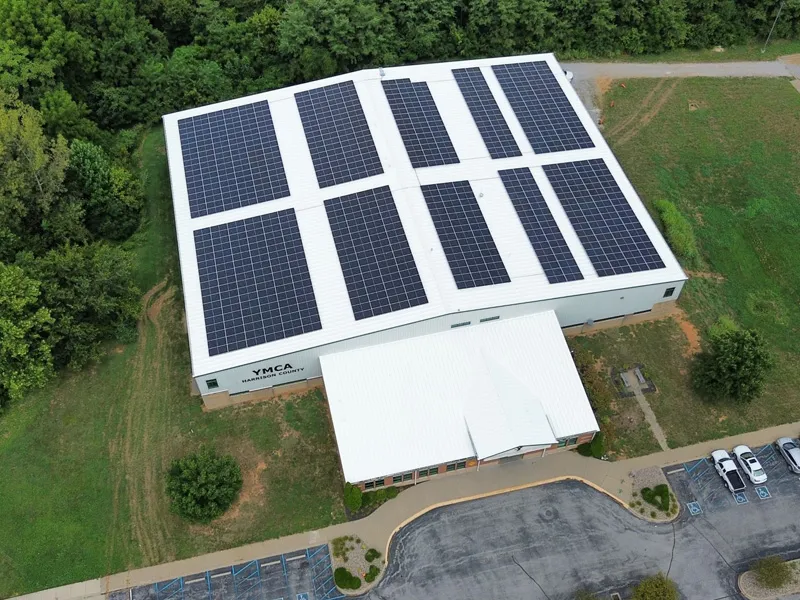
Instead of funding anonymous government programs, your investment directly finances solar energy systems for nonprofits—YMCAs, schools, food banks, and churches. These are the institutions that strengthen communities and need relief from rising operating costs.
- Financial Resilience for Nonprofits: The investor-owned solar system, leased at favorable terms, immediately lowers energy expenses. Every dollar saved flows back into mission-critical work: feeding families, educating children, housing the vulnerable.
- An Investment with a Face: Your capital becomes visible and meaningful—a solar array on a school roof, a lower utility bill for a shelter, a tangible symbol of your impact. You replace the feeling of a tax burden with the satisfaction of a direct, lasting legacy.
Turning October 15th Dread into Actionable Strategy
October 15th marks the expiration of a missed opportunity for last year’s taxes—but it can also serve as a strategic turning point for this year’s planning.
Solar tax equity stands among the most durable and accessible forms of tax mitigation available to high-income individuals and businesses. It offers:
- No AGI Limitations: The ITC and depreciation benefits are fully accessible to high earners without phaseouts.
- Long-Term Income: After the initial tax benefits, investors own a cash-generating asset producing predictable income for 25+ years through stable nonprofit lease agreements.
Don’t let October 15th be another day defined by regret. Let it become the day you changed your strategy—the day your tax payment became an investment in your community and your financial future.
A Better Use for the Same Dollars
We are offering a simple path forward: make that inevitable check part of a legacy.
Turn your tax burden into a powerful engine of community impact and financial return.
Stop paying tax. Start investing in a better world.
FAQ
1. What exactly happens on October 15 for extended filers?
October 15th is the final deadline for individuals and businesses that filed a tax extension. While the filing itself may have been postponed, the taxes owed were due long ago—making this the date when a substantial payment must be finalized to the IRS.
2. How does Brightwell help turn that payment into an investment?
Brightwell connects investors with qualified solar projects that generate clean energy for community nonprofits. Through federal tax incentives and bonus depreciation, your capital is redirected from a tax payment into a tangible, income-generating asset.
3. What tax benefits are available through solar investments?
Two key benefits drive the strategy:
- 100% Bonus Depreciation: This allows you to deduct the system’s entire depreciable basis in the first year.
- The Investment Tax Credit (ITC): This provides a dollar-for-dollar reduction of your federal tax liability, with a base credit of 30% (which can be enhanced up to 50% or more).
4. Can I use these credits to reduce taxes I’ve already paid?
Yes. The ITC can be carried back three years and forward 22 years, allowing investors to recover taxes already paid or offset future tax liabilities.
Perspectives on modern operations and smart growth.



Let’s chat to see how we can unlock new opportunities for impact, together.