
Turning Energy Burdens into Community Assets: How Brightwell Curates Impact You Can See

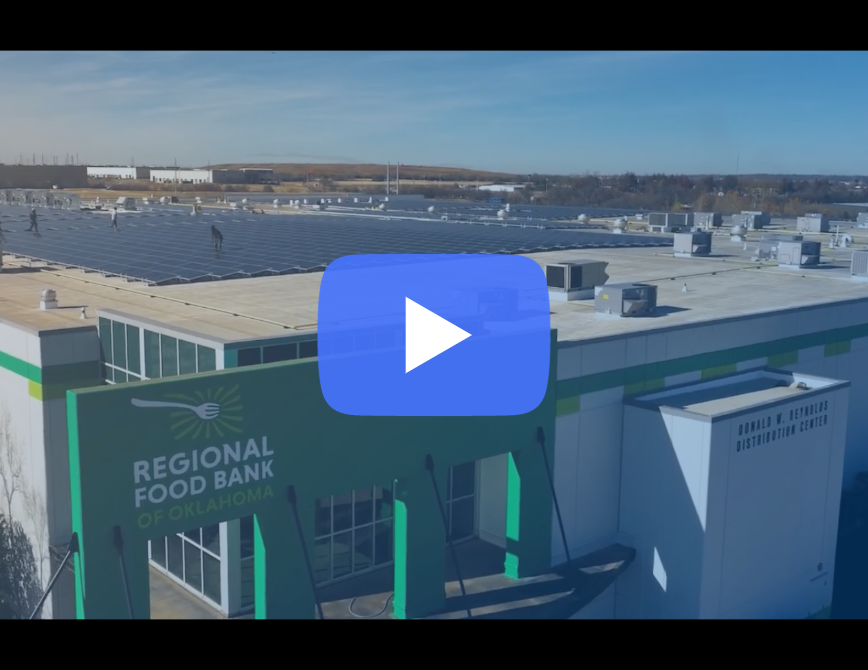
See how solar savings free resources for mission-critical work, helping the Regional Food Bank strengthen operations, stabilize energy costs, and reinvest more dollars into serving families.
Across the United States, rising energy costs continue to put pressure on nonprofits, schools, and places of worship that already operate within tight margins. Energy is a line item they cannot avoid and cannot easily predict, yet it directly limits how much they can invest in their staffs and mission. As utilities become more volatile and electrification expands, the financial strain is only increasing.
At the same time, many of these organizations recognize that distributed energy projects, particularly solar, can offer long-term budget stability and a credible path to support their resources and facilities. The challenge has never been interest in energy alternatives. The challenge is execution.
This article unpacks how Brightwell addresses that problem through expertly-designed projects, structured financial models, and hands-on advocacy that helps nonprofits navigate capital barriers and complex governance. If you would like to hear the full conversation behind these insights, you can watch the discussion between Brightwell CEO Tony Capucille and Director of Advocacy Nate Bauer in the podcast episode below.
Why Nonprofits Are Drawn to Solar in the First Place
Nonprofits consistently identify two motivations when exploring solar and distributed energy.
First, cost control. Energy is one of the top operating expenses across nearly every mission-driven organization. Because electricity costs are both mandatory and volatile, they directly affect how much funding remains for programs, staff, and community services. Nonprofit leaders often express a desire to take back agency over a cost that has historically been dictated entirely by utilities and economic cycles.
Second, stewardship. While environmental stewardship matters, financial stewardship often carries more day-to-day weight. Donor-supported organizations are expected to be prudent, forward-thinking, and innovative. Demonstrating that they are using resources wisely is part of maintaining trust. A long-term solution that stabilizes energy expenses allows leadership teams to signal responsibility and innovation at the same time.
These motivations are strong, but they do not remove the real barriers that stand in the way.
Where Good Intentions Meet Operational Roadblocks
Even highly motivated organizations struggle to execute energy projects. Three constraints appear almost universally.
Capital limitations
Most nonprofits cannot deploy substantial capital toward infrastructure, even when the long-term economics are compelling. Available funds compete with urgent needs such as staffing, shelters, food programs, facility maintenance, and student services.
Procurement and governance complexity
Schools, faith communities, and nonprofits often require approval from multiple committees, administrators, or boards before advancing any contractual decision. Without expert guidance, even well-intentioned projects stall for months or collapse entirely.
Technical uncertainty
A project that looks viable from the street level may fail economically once utility tariffs, demand charges, shaded roof surfaces, or consumption patterns are analyzed. Many organizations do not have access to the specialized expertise required to determine whether a project will actually reduce costs.
These hurdles are precisely where Brightwell steps in.
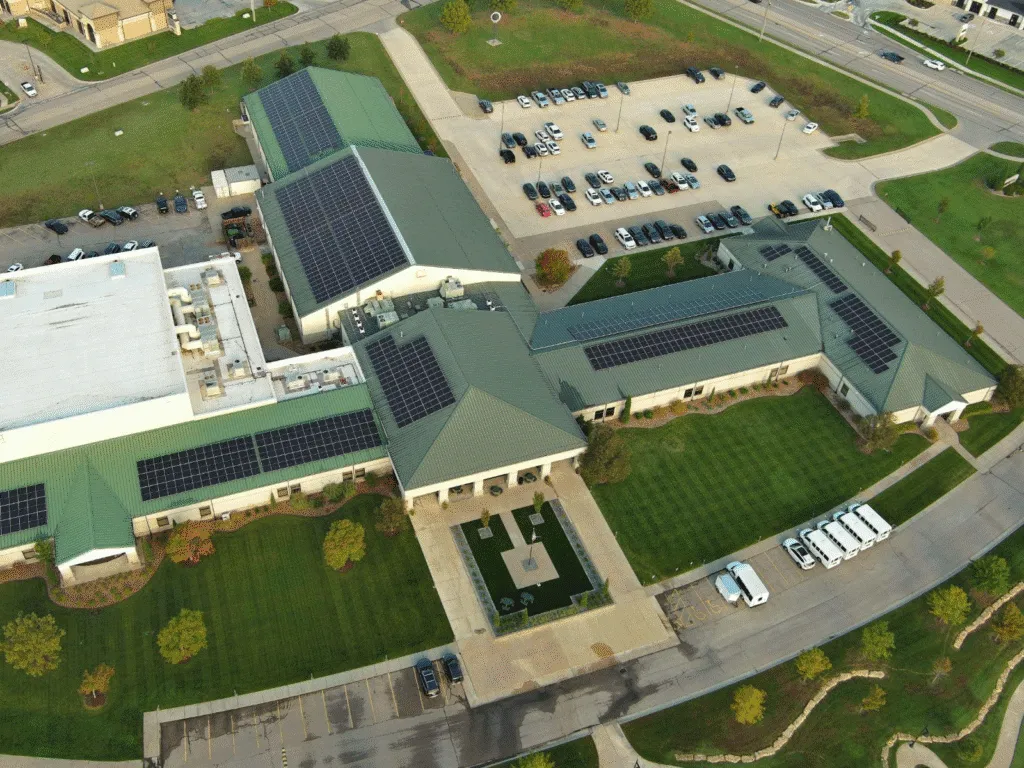
Curated Projects Designed to Deliver Real Benefit
Brightwell’s role is to bridge the gap between nonprofit readiness and investor opportunity. The process begins with rigorous screening to ensure that any project brought to the marketplace delivers measurable value.
Technical validation: NABCEP-certified designers analyze rooftops, load profiles, net metering rules, and utility tariffs to confirm that a project will truly reduce costs. If projects do not provide substantial long-term savings for the organization, Brightwell helps the organization to better understand why solar is not the right fit for them.
Governance support: Brightwell’s team works directly with executive directors, CFOs, board committees, and procurement officers. They help each organization understand the opportunity, evaluate competing needs, and move through internal approval processes without unnecessary burden.
Financial structuring: Brightwell uses Energy Management Service Agreements and bundled scopes such as Roof + Solar to resolve capital barriers that traditionally prevent organizations from acting. In many cases, solar can be paired with roof replacements or critical facility work, transforming a capital drain into a long-term asset.
The result is a marketplace of curated, custom-designed projects that align investor incentives with organizational needs. Each project is designed to be a win for the nonprofit and a clear, transparent opportunity for the investor.
Why This Matters for Impact Investors
For investors seeking a meaningful alternative to traditional capital deployment, Brightwell offers three aligned benefits.
Tax advantages grounded in compliance
Investments may qualify for federal tax incentives subject to IRS rules and individual eligibility. Brightwell structures each project so that these benefits are clearly modeled and responsibly communicated.
Potential to generate a return from their tax liability
Investors can create income streams from capital that would otherwise go toward taxes, supported by modeled outcomes and long-term service agreements.
Visible, local impact
Unlike investments in distant funds or indexing strategies, Brightwell projects exist in the real world. Investors can visit the sites, meet the organizations, attend ribbon cuttings, and see exactly how their capital strengthens their communities.
Impact is not a byproduct of the investment. It is one of the three pillars the entire model is designed around.
When Energy Projects Become Community Stories
Some of the most powerful illustrations of Brightwell’s approach come from the organizations themselves.
A nonprofit near Oklahoma City recently celebrated its Brightwell project at a block party. Staff and community members gathered not only to recognize the solar installation but to acknowledge how stabilizing their energy costs would allow them to reinvest in programs that restore dignity and employment opportunities.
A school, once placing buckets in classrooms to catch leaks, used a bundled solar and roof project to replace their entire roof and secure decades of predictable energy cost reduction. What would have been a painful and underfunded capital project became a strategic investment in both safety and long-term stability.
Each example reflects Brightwell’s central principle. A project should never be just a construction initiative or financial mechanism. It should be a long-term solution that strengthens a mission and builds a more resilient community.
What It Means for the Future
As energy prices continue to rise and as facility burdens grow, nonprofits organizations are under increasing strain. Distributed energy has become one of the few tools that can simultaneously lower operating expenses, ease budget uncertainty, and preserve capital for mission.
For impact investors, opportunities that deliver financial benefits while also strengthening local organizations are rare. Brightwell’s marketplace was created to bridge that gap and to curate projects that produce measurable outcomes on both sides.
Brightwell’s long-term mission is simple: put $1 billion back into communities in ways that improve facilities, expand mission capacity, and build a foundation for future generations. The path there is built one project at a time, one organization at a time, and one investor partnership at a time.
Perspectives on modern operations and smart growth.


Let’s chat to see how we can unlock new opportunities for impact, together.